You have completed the walk across Graz's architectural fault lines. From biomorphic acrylic grafted onto 19th-century cast iron to subterranean lightwells and raw steel frames standing off against Neo-Baroque facades, Graz demonstrates that urban preservation can be an active, provocative conversation between centuries rather than a static museum piece.
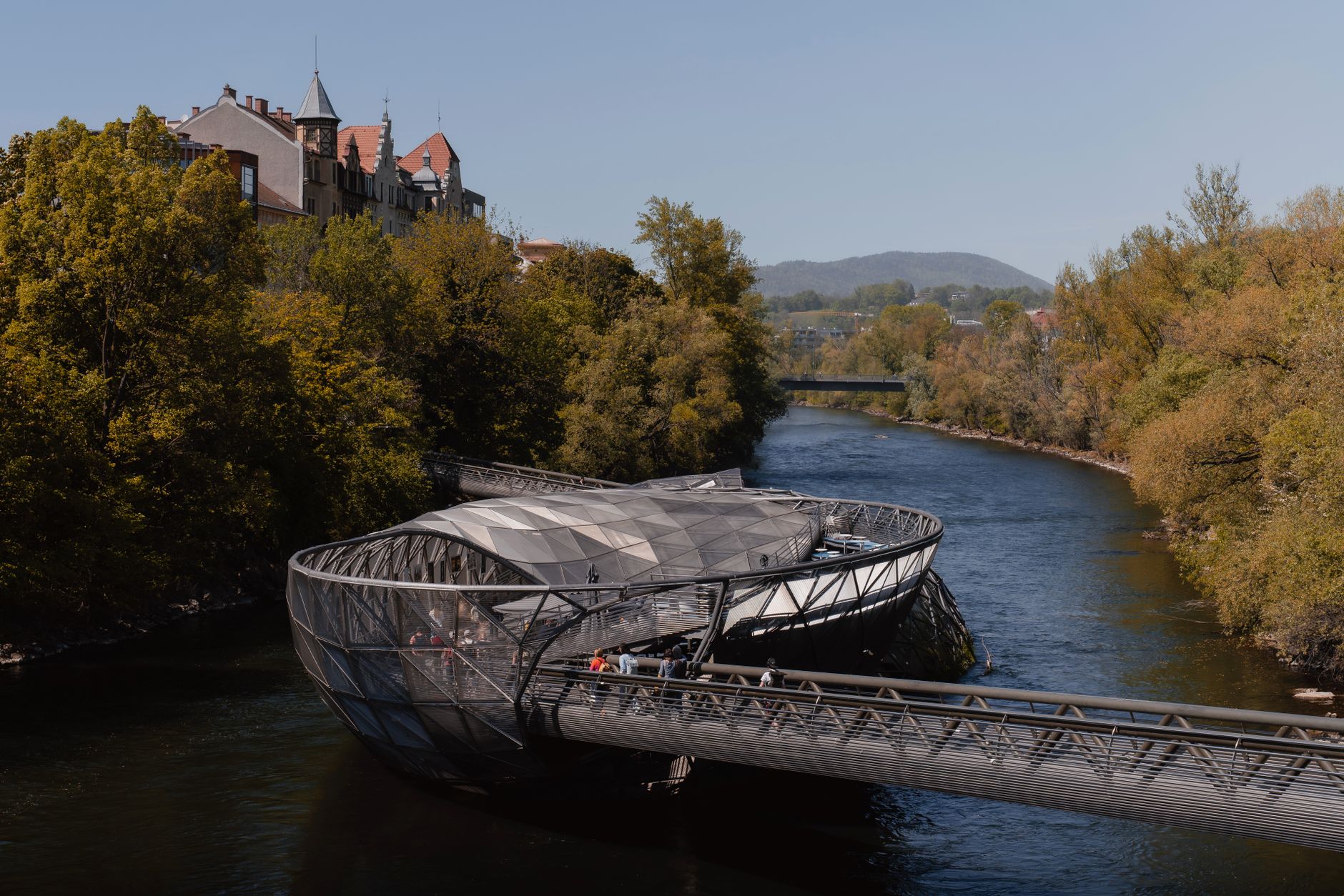
Historically separated from Graz's fortified city center by the Mur River, the right bank—comprising the districts of Lend and Gries, collectively known as Murvorstadt—developed as an industrial corridor of timber docks, mills along the artificial Mühlgang canal, and working-class housing. For generations, the river formed a hard social and economic boundary, leaving the right bank with a reputation for neglect and rough working-class life. However, Graz's designation as European Capital of Culture in 2003 launched a major urban transformation. Landmark architectural interventions like the Kunsthaus Graz anchored a creative awakening that reshaped Lend with design shops, market cafes, and cultural spaces, while Gries retained its heterogeneous, multi-ethnic commercial character. On this tour, you will trace how creative adaptive reuse, street art, immigrant entrepreneurship, and public art monuments have redefined the 'other' Graz without erasing its deep industrial and working-class roots.
See next tour